Pho, a quintessential Vietnamese dish deeply rooted in the rice-farming civilization, has traveled with Vietnamese people across the globe. Many stories and historical milestones surround this meaningful dish that you shouldn’t miss.
Phở Việt Nam bắt nguồn từ đâu?
Although there are many theories about the origin of pho, there is still no definitive conclusion. Four main theories have been proposed, including:
– One theory suggests that “pho” is a phonetic variation of “fun” (粉), the Cantonese dish “ngưu nhục phấn” (牛肉粉) from Hanoi. This is a noodle dish with beef, served in a meat-based sauce. However, the preparation technique for this dish is quite different from Vietnamese pho.
– The second theory links pho to the French beef bone broth pot-au-feu, but research reveals that this dish is unrelated to pho in terms of both ingredients and preparation. It contains many vegetables such as radishes and carrots, which are completely different from Vietnamese pho in both ingredients and preparation, so this theory is unconvincing.
– According to folklore, pho originated from a buffalo stew dish of the people in the Red River Delta region in the early 20th century. This noodle dish was made from buffalo bone broth and served with rice noodles, onions, coriander, and buffalo meat. Later, buffalo meat was replaced with beef, as beef was easier to find and cheaper.
– Another theory about pho suggests it originated in Van Cu village (Nam Dinh province) in the late 19th century. The locals there prepared the dish from undried rice crackers, cut into small pieces and cooked with bone broth and beef, then sold it to workers in textile factories. However, the origin of the name “pho” in this theory remains unsatisfactory.
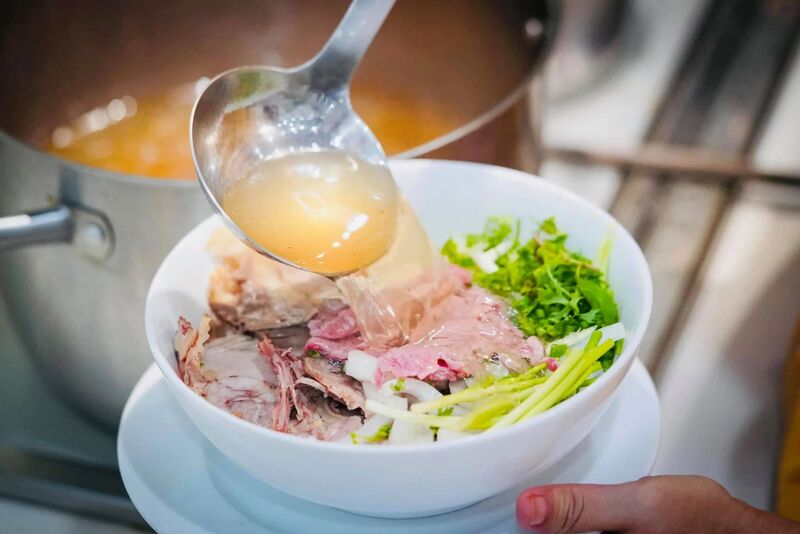
There are many different theories about the origin of Vietnamese pho. (Photo: Nhan Dan Newspaper)
Development Process and History
According to Nguyen Ngoc Tien’s research, pho appeared in the late 19th century, but there is no precise date. However, some documents suggest that pho has been around since the beginning of the 20th century. Henri Oger’s book “The Crafts of the Annamese People” (1908-1909) includes an illustration of a mobile pho vendor in Hanoi. Other documents, such as the dictionary of the French School of Far Eastern Studies (1920), clearly define pho as cooked pho and rare pho.
In 1937, in the poem “Pho Duc Tung” by Tu Mo, pho was described with familiar ingredients: rice rolls, beef, and broth. This confirms that pho has become a signature dish of Hanoi.
Vietnamese Pho, Over 100 Years Old
Pho officially appeared in the Vietnamese Dictionary (1930), but its origins can be traced back to the early 20th century. According to writer Nguyen Cong Hoan (1903-1977), he ate pho as early as 1913, while Nguyen Van Vinh (1882-1936) mentioned pho in a letter sent from Paris in 1906. Other studies confirm that pho began appearing around 1907, as evidenced by the image of a mobile pho vendor in the book “The Crafts of the Annamese People” (1908-1909) and the definition of pho in the dictionary of the French School of Far Eastern Studies (1920, published 1933). According to researcher Nguyen Ngoc Tien, pho was initially a common dish for laborers, but gradually developed into a sophisticated and refined dish for the middle class in Hanoi, through the creativity and transformation of folk dishes.
Pho in dictionaries
Pho did not appear in old dictionaries such as Alexandre Rhodes’ Vietnamese-Portuguese-Latin dictionary (1651) or Huynh Tinh Cua’s (1895), Genibrel (1898). Only in the explanatory dictionary of the Association for the Advancement of Knowledge in 1930 was pho officially recorded, confirming that this dish could only have appeared during the period 1900-1907.
Pho comes in many different variations that attract diners.
Originally, pho was only beef pho with cuts of meat like brisket, flank, and chuck; later, rare beef pho was added. During the resistance war (1947-1954), chicken pho emerged as a replacement due to the shortage of beef. Chicken pho has many preparation methods, such as whole chicken pieces, skinless chicken, sliced chicken, or pho with chicken thighs, pho with chicken tails, etc.
Over time, along with the changes in society and the times, pho has developed into many different types such as: pho soup (beef pho, chicken pho, pho with wine sauce) and dry pho (stir-fried pho, puffed fried pho, pho rolls). These pho variations also have many unique creative features, such as stir-fried pho with a thick sauce made from stir-fried beef, or pho rolls with pho noodles wrapped around meat, vegetables, and a sweet and sour fish sauce.
Pho also varies by region, such as Lang Son sour pho with many local toppings and spices, or Cao Bang duck pho with bone broth mixed with duck roasting liquid. Localities have also created their own unique types of pho, such as the pink pho in Bac Ha made from brown rice.
According to travel experience, Southern pho has a sweeter flavor and is served with more vegetables such as bean sprouts, basil, sawtooth coriander, and beef meatballs. Many pho restaurants abroad also have a Southern-style culinary approach. The creativity doesn’t stop there; many chefs continue to develop unique pho recipes, such as the herbal pho with chicken, lotus seeds, and mugwort leaves in Hanoi, showcasing the sophistication of Vietnamese cuisine.
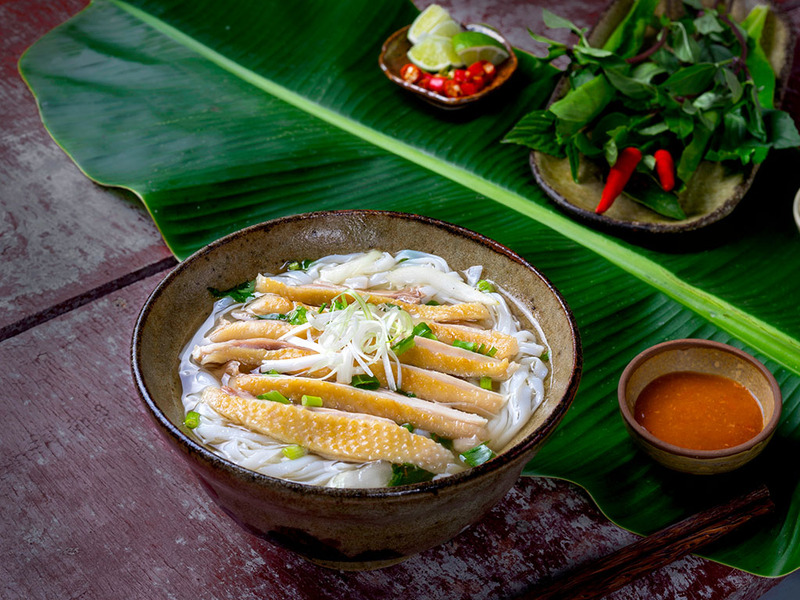
Later, chicken pho became equally popular. Photo: vietnamnomad
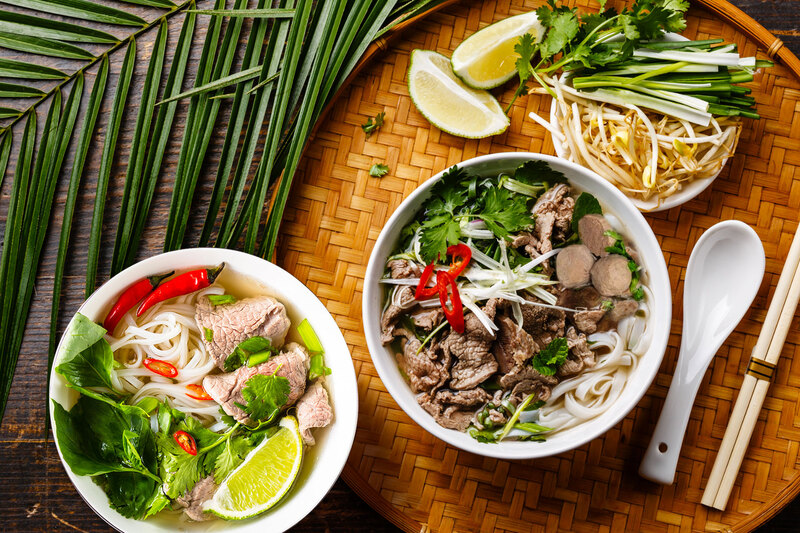
Southern-style pho is sweeter and often comes with beef meatballs and dark soy sauce. (Photo: Asian Inspirations)
The path of pho’s development and global reach.
Pho transcends borders: Pho has followed Vietnamese people all over the world, becoming a global culinary brand. Wherever there are Vietnamese people, there is pho, from Hanoi-style pho restaurants to Southern-style pho, catering to diverse tastes.
Internationalization of pho: In France, the 13th arrondissement of Paris boasts restaurants serving authentic Hanoi-style pho and Southern-style pho. In the US, pho is available in many states, from Baton Rouge (Louisiana) to other major cities. Notably, in Japan, the Thang Long restaurant in Imizu attracts both Japanese and Vietnamese customers.
Pho in international dictionaries: In September 2007, pho was officially included in the Oxford English Dictionary, becoming a proper noun and marking its place in global cuisine.
International reputation: In 2011, CNN ranked pho among the 50 best dishes in the world. By 2022, pho was voted one of the 50 best street foods in Asia.
Pho in the hearts of Vietnamese people: Pho remains a favorite dish in every meal of our people, with the number of pho restaurants constantly increasing. Pho-making villages like Van Cu and Giao Cu (Nam Dinh) have preserved the craft through many generations, bringing pho to all over the country.
Pho and cultural heritage: Hanoi has submitted a dossier to include pho in the national list of intangible cultural heritage and proposed that UNESCO inscribe pho as a world cultural heritage.
Official recognition and modern celebrations
Interestingly, despite being an integral part of Vietnamese culture both domestically and internationally, pho took a long time to receive official recognition. December 12th was officially designated as “Pho Day” in 2018, a year after the first “Pho Day” was organized by Tuoi Tre newspaper. Google has celebrated this day numerous times with special Doodles, appearing in over 20 countries.
Another honor was bestowed upon pho in 2024, when on August 9th, the Ministry of Culture, Sports and Tourism added Hanoi pho and Nam Dinh pho (along with Quang noodles) to the list of national intangible cultural heritage.

Google Doodle honors pho, Vietnam’s national dish.